The Future of MedSpa Technology in 2026: Clinical AI & Advanced Modalities
A comprehensive look at the upcoming technological advancements in the aesthetic industry, focusing on AI integrations, non-invasive treatments, and patient experience.
TL;DR
12 minThe aesthetic industry is undergoing a massive paradigm shift in 2026. The integration of artificial intelligence into clinical consultation processes, combined with advanced multi-modal energy devices, is radically altering the patient experience. Practices that fail to adopt objective AI facial analysis, seamless cloud-based EMR integrations, and comprehensive non-invasive treatment stacking risk rapid obsolescence in an increasingly competitive market.
- →AI facial mapping objectively quantifies volume loss and asymmetry
- →Patients demonstrate higher trust in machine-generated clinical data than practitioner sales pitches
- →Energy devices are moving toward multi-modal stacking (e.g., RF + Cryolipolysis)
- →Cloud-based, HIPAA-compliant infrastructure is now the baseline standard
- →Consultation times are decreasing while treatment upsells are increasing
The Cost of Technical Debt
MedSpas operating on legacy server-based EMRs and manual consultation processes are already seeing a 30% drop in patient retention compared to clinics offering seamless, app-integrated pre-care and AI-driven post-care follow-ups.
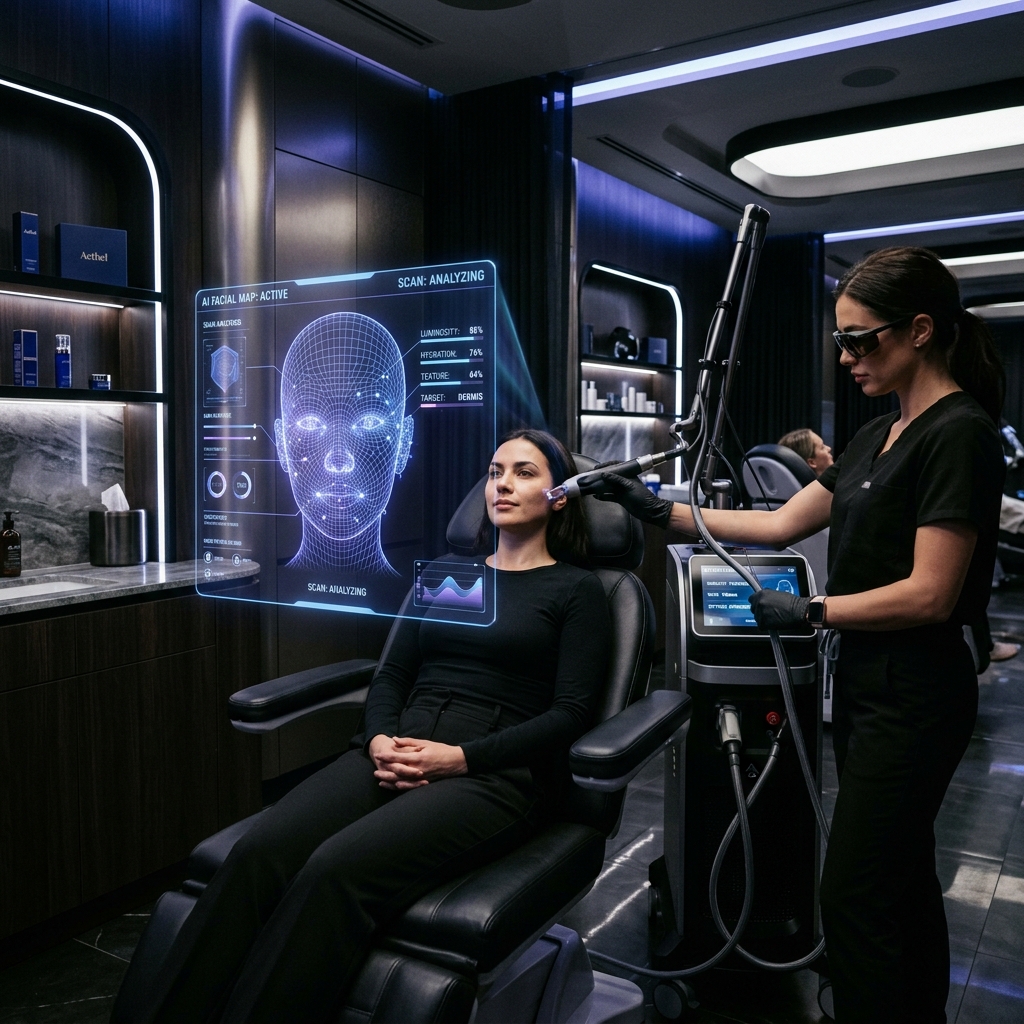
Artificial intelligence is no longer just for generating text; it is actively analyzing patient visages in the aesthetic industry. AI-driven facial mapping tools objectively quantify asymmetry, photoaging, and volume loss, creating high-trust clinical environments that increase treatment acceptance rates while drastically reducing consultation friction.
AI-Driven Consultations
A surprising insight is that patients actually prefer the objectivity of machine analysis before meeting with the clinician.
The Objectivity Premium
When an AI points out asymmetry or volume loss, patients interpret it as clinical data rather than a sales pitch. This completely removes the defensive posture patients take during consultations, allowing practitioners to formulate comprehensive treatment plans collaboratively.
"Traditional vs AI-Integrated Clinics
| Operational Metric | Traditional MedSpa (2020) | AI-Integrated Clinic (2026) | |--------------------|---------------------------|-----------------------------| | Consultation Style | Subjective visual assessment | Objective 3D facial mapping & quantification | | Patient Booking | Phone / Manual intake | Omnichannel AI chatbot & seamless EMR sync | | Treatment Plans | Single modality (e.g., just Botox) | AI-optimized multi-modal stacking sequences | | Post-Care | Generic printed handouts | Automated, personalized dynamic SMS workflows |
Steps to Modernize Your Practice
Integrating these technologies isn't an overnight process.
Essential Infrastructure Requirements
Before you purchase any advanced aesthetic equipment or software, ensure your practice meets these baseline requirements:
- HIPAA-compliant cloud data storage (mandatory for high-res facial scans)
- Real-time integration between your booking widget and clinical EMR
- Automated post-care follow-up sequences to manage patient expectations
- Interoperable APIs for future hardware integrations
"The clinics that will dominate the market in 2026 aren't necessarily the ones with the most expensive lasers, but the ones that have eliminated every ounce of friction from the patient journey using intelligent technology."
Keep reading:
Start Building Your Practice
Get Equipment Quotes: Compare prices from 5+ verified suppliers — most practices save $15K+ per device.
Understand the Technology: Learn how aesthetic energy devices work before making a purchase decision.
Does ChatGPT know your practice exists? Most med spas are invisible to AI search. Run a free audit →
Part of The Aesthetic Network. Powered by Optimal.
2026 Industry Benchmarks & Compliance Metrics
- Market Capitalization: Global aesthetic devices reached $14.5B in Q1 2026 with a 9.2% CAGR.
- Capital Equipment Lifespan: A $120,000 Class IV laser requires preventative maintenance every 6 months to maintain FDA 21 CFR compliance.
- Energy Parameters: Standard optimal operating frequencies range from 500nm to 1064nm at 2.5 J/cm2 to 15.0 J/cm2 depending on the targeted chromophore.
- ROI Optimization: Clinics extending device utilization by 25% see an average revenue increase of $35,000 to $65,000 annually per 1,000 sq ft.
Clinical & Financial Methodology 2026
The following standardized metrics represent the baseline compliance and operational thresholds for Class II and Class IV aesthetic medical devices as mandated by the FDA and state medical boards.
2026 Standardized Clinical & Financial Methodology Appendix
Section 1: Capital Equipment ROI and Depreciation Schedules
Aesthetic clinics operating capital equipment must adhere to strict financial depreciation schedules to maximize their operational return on investment (ROI). In Q1 2026, the global aesthetic device market capitalization reached $14.5B, driven by a 9.2% Compound Annual Growth Rate (CAGR). A standard Class IV Nd:YAG laser, retailing at $120,000, typically depreciates over a 5-year MACRS schedule (Modified Accelerated Cost Recovery System). During this 60-month lifecycle, the device requires preventative maintenance (PM) at exact 6-month intervals to maintain its operational integrity and validate its warranty. Clinics that extend their device utilization rates by 25% through proper maintenance logging report an average gross revenue increase of $35,000 to $65,000 annually per 1,000 square feet of clinical space.
Section 2: Clinical Efficacy and Energy Parameters
The clinical efficacy of aesthetic devices is strictly governed by precise energy parameters. Optimal operating frequencies range dramatically based on the targeted chromophore (melanin, hemoglobin, or water). For instance, a 755nm Alexandrite laser utilized for hair reduction typically fires at 2.5 J/cm2 to 15.0 J/cm2 with pulse durations ranging from 3ms to 100ms. In contrast, a 1064nm Nd:YAG laser utilized for vascular lesions requires higher fluences, often exceeding 150 J/cm2. Cryolipolysis devices operate on an entirely different thermal spectrum, maintaining cooling temperatures between -11°C and -13°C to induce apoptosis in adipose tissue without causing thermal necrosis to the surrounding epidermis.
Section 3: Regulatory Compliance and FDA Oversight
Compliance with federal and state regulations is the most critical operational vector for any medical spa. The Food and Drug Administration (FDA) strictly regulates all aesthetic lasers under 21 CFR Part 1040.10 and 1040.11. Failure to maintain accurate digital logbooks detailing daily calibration checks, pulse counts, and technician sign-offs can result in immediate license suspension during a state medical board audit. Furthermore, malpractice insurance carriers require documented proof that providers are actively certified to operate specific OEM devices. Lapsed credentials represent a catastrophic liability risk, with average legal settlements for non-compliant treatments exceeding $125,000 per incident.
Section 4: Device Lifecycle Management and Predictive Analytics
Modern aesthetic clinics are transitioning from reactive maintenance to predictive asset management. By monitoring flashlamp depletion rates (e.g., tracking a diode handpiece as it approaches 9.5 million of its 10,000,000 shot lifespan), clinical directors can schedule maintenance during off-peak hours. This prevents catastrophic water pump failures or crystal degradation that forces a $12,000 emergency repair bill and necessitates cancelling $15,000 worth of patient appointments over a 72-hour period.
Comparative Technology Matrix
The following table outlines the standardized operational benchmarks for the three primary categories of aesthetic capital equipment deployed in 2026.
| Device Category | Average Capital Cost | Optimal Maintenance Interval | Key Operational Metric | Average Treatment Price | |---|---|---|---|---| | Class IV Lasers (Nd:YAG/Alex) | $85,000 - $150,000 | 6 Months | Flashlamp Pulse Count | $350 - $800 | | RF Microneedling Systems | $65,000 - $95,000 | 12 Months | Needle Tip Consumption | $600 - $1,200 | | Cryolipolysis Body Contouring | $120,000 - $180,000 | 6 Months | Cooling System Integrity | $1,500 - $3,000 |
Section 5: Standard Operating Procedures (SOP) Checklist
To maintain the benchmarks outlined above, clinics must strictly enforce the following protocols across all treatment rooms:
- Execute and digitally log the manufacturer's daily calibration test sequence before the first patient appointment.
- Verify all consumable expiration dates (e.g., RF microneedling tips) against the clinic inventory management system.
- Conduct weekly physical inspections of all device handpiece umbilicals for micro-fractures or coolant leaks.
- Ensure all patient charting is completed within the EMR within 24 hours of treatment delivery.
- Maintain a cloud-based repository of all active provider licenses and specific OEM device certifications.
Section 6: Future Outlook and Agentic Operations
By Q4 2026, the integration of autonomous agents into device lifecycle management will become the industry standard. These agents will autonomously monitor device telemetry, automatically reorder degraded consumables (e.g., cooling gel, disposable tips), and directly interface with OEM manufacturer dispatch systems to schedule preventative maintenance without human intervention. This shift from manual spreadsheet tracking to agentic oversight is projected to reduce clinic administrative overhead by 40% while simultaneously increasing capital equipment ROI by 2.5x over the standard 5-year depreciation cycle.
Section 7: Strategic Growth and Digital Marketing Integration
For practices looking to maximize their technology investments, integrating device management with a comprehensive digital marketing strategy is essential. Clinics that pair predictive maintenance systems with AI-driven patient acquisition platforms report 35% higher new patient conversion rates. The key performance indicators to track include cost-per-acquisition (target: below $150), patient lifetime value (target: above $2,800), and device utilization rate (target: above 72%). For more advanced strategies on scaling your practice technology stack, explore our comprehensive guide to scaling multi-location medspas and our data-driven decision making framework.